



Blog / Merle Stone Chevrolet Service

5 Faulty Alternator Warning Signs

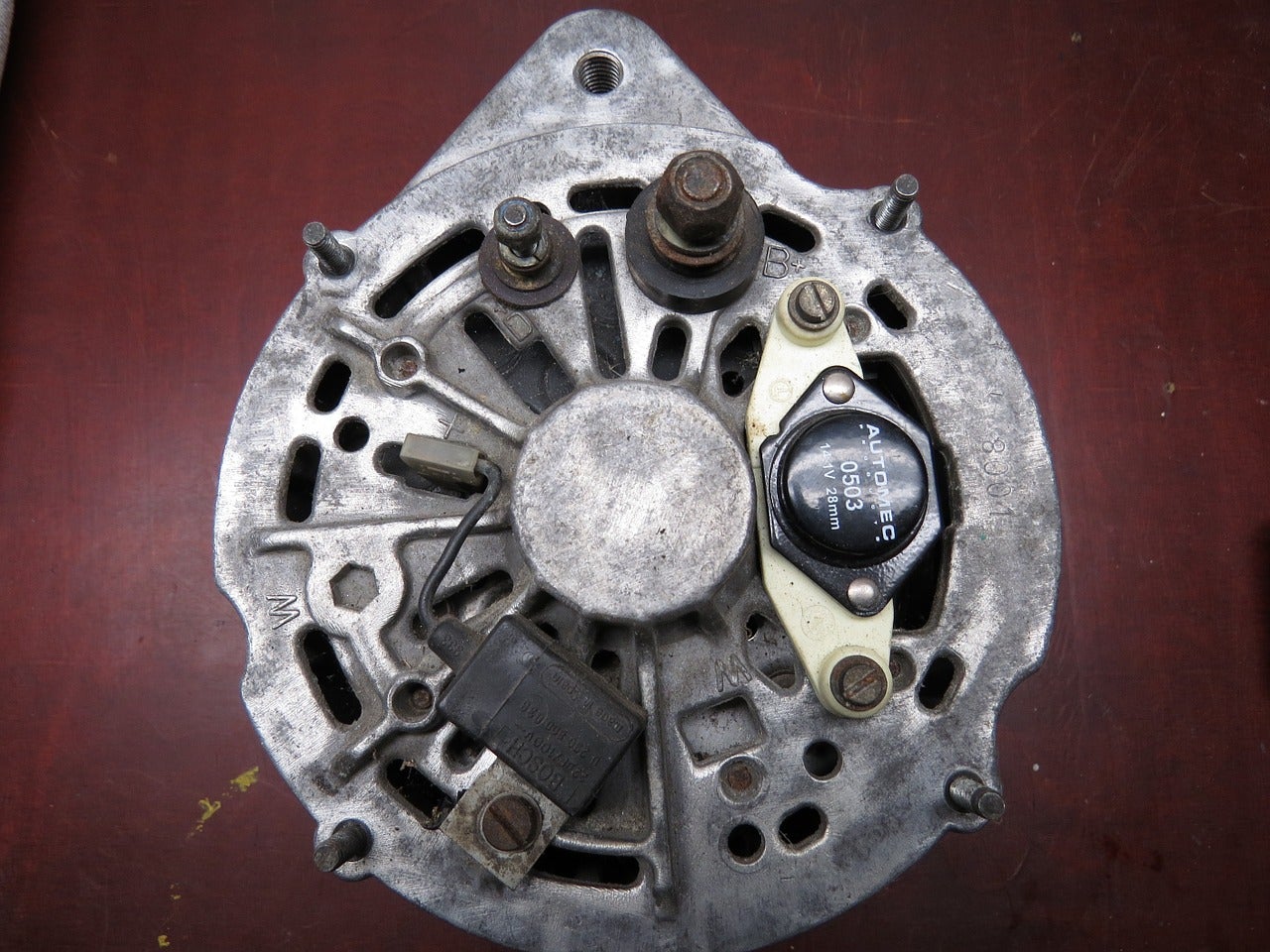
generator-326044_1280

An alternator is a generator that provides power to keep your vehicle's battery charged. This is an important part of your vehicle, as it cannot run properly if the alternator fails. When you're driving, you'll want to stay alert for some of the warning signs that your vehicle's alternator may be faulty. Take a look at some of the warning signs below, so you can take care of the problem as soon as possible.

1. Abnormal Engine Sounds and Smells

If you start your engine and it makes squealing or rattling noises, you may need to have your alternator looked at. Additionally, smelling burnt rubber could mean that the alternator belt is deteriorating. Make sure to inspect your alternator belt regularly so that you don't replace the alternator when a less expensive component is creating the issue.

2. Structural Damage

Your alternator goes through a lot during its lifetime. Obviously, using it will cause wear over time, and this eventually has an impact on the structural integrity of the part's casing. When inspecting your alternator, look for cracks or other damage, and replace it immediately if you notice any structural damage. If you have repeatedly replaced your alternator as a result of structural damage in an unreasonably short period of time, you may have more significant mechanical issues to deal with. This repeated issue can manifest if a pulley is off-center or the alternator's tensioner is too tight.

3. Battery Refuses To Stay Charged

If your battery doesn't stay charged, you could have a couple of different problems. Your battery could be too old to operate correctly, or your alternator could be damaged or dead. If your battery isn't old, the latter is almost certainly the problem. An onboard computer keeps track of the voltage output of your alternator and the charge level of your battery. When either of them has issues, you should see a warning light turn on somewhere on the driver's instrument panel.

4. Starting Difficulty or Stalling

If your vehicle stalls at stops or is particularly stubborn when you're trying to start it, you may have a faulty alternator. Make sure you get your vehicle checked out as soon as possible after the first stalling incident. Procrastination can lead to disaster because a vehicle that stalls at the wrong moment can cause a severe accident.

5. Other Systems Keep Failing

A failing alternator will cause issues with every electrically powered system and feature in your vehicle. If your outlets and USB ports aren't charging when devices are plugged in, your alternator may need attention. On the same note, your air conditioning and heating systems are connected to the alternator as are the safety systems, so if you notice problems with any of these elements, you should definitely have your alternator checked out. As long as you stay vigilant in terms of vehicle maintenance, you should have no trouble discovering alternator issues before they cause serious problems. If you notice any of the issues listed above, bring your vehicle in to Merle Stone Chevrolet in Porterville, CA to have it inspected before it becomes a major or costly problem.

Image by Johnny Gejdner from Pixabay
Posted in:

Related Posts

tires

6 Benefits of Getting a Tire Rotation at Your Chevy Dealer

Regular tire rotation provides drivers with a number of benefits, including superior handling, better gas mileage, reduced safety risks, and cost savings. Let's look in detail at the main reasons you should visit your local Chevy dealer twice a year to have your tires swapped around. more 6 Benefits of Getting a Tire Rotation at Your Chevy Dealer Enjoy a Quieter, Smoother Ride All cars are designed to operate with four wheels of the same size, but driving with uneven tires means some wheels are effectively becoming smaller than others, which results in increased friction and more noise and vibrations from the road. This all works to diminish your handling, cornering, steering, and overall driving experience. Rotating your tires to keep them uniform in size helps to avoid these issues and keep your drives quiet, smooth, and pleasurable. Reduce Maintenance Costs When tires become excessively uneven, it also puts awkward pressure on closely connected car parts, such as the wheel axles and suspension. This uneven strain gradually pushes the other car parts out of shape, leading to additional maintenance costs over time. For this reason, routine rotation helps keep your entire vehicle in better shape for longer. Reduce the Risks of Blowouts When one or two tires become excessively worn down, they become more susceptible to blowouts. Having tires unevenly in contact with the road also diminishes traction, putting you at increased risk of skidding or hydroplaning on wet patches of road. Increase Fuel Efficiency When your tires are uniform, friction is minimized. Uneven tires generate extra friction, which means more engine power is needed to propel your vehicle, and fuel efficiency is reduced. As a consequence, the longer you leave it between rotations, the more frequently you'll find yourself stopping for gas. Save on the Cost of New Tires Rotating your tires often also helps each set of tires last longer. By spreading out the wear and tear, rotation prevents any one or two tires from wearing down faster than the others. Tire sets of four almost always need to be replaced at the same time, even if only one or two tires have become unsafe. This is because installing only two new tires usually results in two tires with much thicker treads than the two already worn-down tires. Keep Your Warranty Valid Warranties provide a great deal of peace of mind to many drivers, even though they rarely need to be used. If you currently have a tire warranty, it's likely to stipulate routine rotation of your tires in order to remain valid. Make sure you know the warranty's recommended schedule and stay well within it. Visit Merle Stone Chevrolet today to have your tires rotated by qualified professionals. We're a full-service dealership that's been diligently serving the local communities of northern California since 1959.

2023 Chevy Tahoe2

Four Engine Problems You Should Always Fix at Your Porterville Chevy Dealer

For optimal performance and fuel economy, it's important to take care of your engine. When you notice engine problems, the best thing you can do is schedule a service appointment at your Chevy dealer right away. Chevy mechanics can perform an engine diagnostic test to find the source of your issues so you can get back on the road as quickly as possible. more Four Engine Problems You Should Always Fix at Your Porterville Chevy Dealer 1. Low Engine Oil Low engine oil might seem like a small issue, but it can turn into a big problem. When there isn't enough oil in your engine, the oil pressure is too low to provide adequate lubrication to the engine. Without enough oil, the various parts of your engine will rub together too much, leading to excessive wear and tear from the friction. Low oil pressure can even cause your engine to stop working or overheat. If your check engine light turns on, you should schedule service right away. If you happen to have engine oil for your specific model on hand, you can top off your engine levels at home until you can visit the dealership for more detailed engine oil service. The dealership mechanic will drain out old oil, fill your engine with fresh oil, and correct any issues that might lead to oil leaks. 2. Overheating Engine An overheating engine is a major cause of concern. Not only is engine overheating dangerous to you, but it can also cause warping of the engine that could result in costly repairs. An overheating engine is often caused by coolant leaking from the radiator. 3. Leaks and Excessive Exhaust If you notice new fluid puddles beneath your car when it has been parked for any length of time, you might have a leak somewhere in your engine. Leaks can come from oil, coolant, transmission fluid, and other chemicals used in your vehicle. Leaks should be addressed as quickly as possible, particularly if you also notice excessive dark exhaust when you turn your car on. 4. Ignition Issues If your engine turns over without igniting, you might have a serious engine issue on your hands. Ignition problems are often associated with faulty spark plugs, problems with the ignition coil, and wiring issues. Sometimes, ignition issues can even cause problems when you're on the road, such as stalling or misfiring. It's best to get these issues fixed as quickly as possible, so you are safe on the road. Some engine issues, like low motor oil levels, are easy to fix, while other problems may be more challenging. No matter what problems your engine has, the expert Chevy mechanics at your dealership can repair your Chevy quickly. Book your next service appointment at Merle Stone Chevrolet today.

catalytic converter

Does Your Chevy Need a New Catalytic Converter?

It's an unfortunate fact that catalytic converters are often coveted by thieves. This is because the precious metals and sophisticated inner workings of a cat make it a very valuable car part. No driver wants the expense of replacing a stolen or broken-down cat. With this in mind, pay heed to the following signs of trouble and if you notice them, visit your local Chevy dealer to have it repaired before the problem worsens. more Does Your Chevy Need a New Catalytic Converter? You Catch a Whiff of Sulfur One of the toxic emissions your engine produces is hydrogen sulfide. When your cat is working well, the hydrogen sulfide is converted neatly into harmless gases. But if your cat stops functioning properly, the hydrogen sulfide will leak out, and you'll soon detect its distinct sulfury rotten egg smell. Aging or dirty transmission fluid can also emit a rotten egg smell. But it's safer to assume that a sulfury stink is hydrogen sulfide because this gas is extremely dangerous to breathe. So if you smell rotten eggs, pull over at once and try to identify the source. You might need a technician to help diagnose it. You See Black Exhaust Smoke Cats can malfunction if any escaped fuel somehow leaks into the exhaust system. Fuel might leak like this because of a worn-out fuel filter, a faulty fuel pressure sensor, or a misfiring combustion chamber. If it reaches the cat, fuel will corrode the cat's delicate internal meshwork. The fuel can also sometimes ignite because the interior of a cat is often very hot. This will instantly melt the meshwork and precious metals, destroying your cat. In this case, you'll see black smoke pouring from the tailpipe. Your Engine Starts to Struggle A clogged cat can harm the engine by creating a block to the flow of oxygen. When the backup of gases and air prevents fresh oxygen from entering the engine's cylinders, your car will start misfiring. You'll experience a loss of power and acceleration. You'll start idling roughly when you pause at traffic lights. And your fuel economy will drop as well. You Hear Rattling When You Corner When a cat breaks down with age, the meshwork inside starts to fall apart. When you steer around corners, you might hear these loose parts rattling below you. A hard knock on the cat from a pothole can loosen the cat itself, in which case you'll hear it rattle around in its loosened brackets. How a Chevy Dealer Diagnoses Cat Trouble When your engine or exhaust system has problems, it's not always easy to know if the cat is to blame or not. One way a technician works this out is by measuring heat. A clogged cat creates an enormous amount of heat just upstream of it as emissions build up, unable to escape. A technician can measure this heat with a pyrometer, infrared thermometer, or another tool. Have your cat examined and repaired today by qualified professionals at Merle Stone Chevrolet. We've been proudly serving the region's drivers since 1957.